Looking for cupping therapy in Chevy Chase, MD? At Spa Chevy Chase, cupping therapy is a traditional treatment that uses suction cups placed on the skin to help ease muscle tension, support circulation, and complement pain-relief and wellness care. Cupping is commonly performed with glass or plastic cups, and while many people use it for discomfort and recovery support, temporary circular marks or bruising can occur after treatment and the overall evidence for benefits remains mixed.
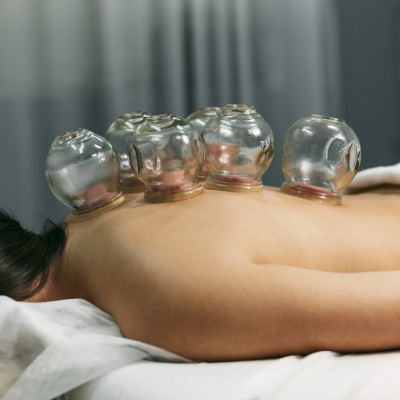
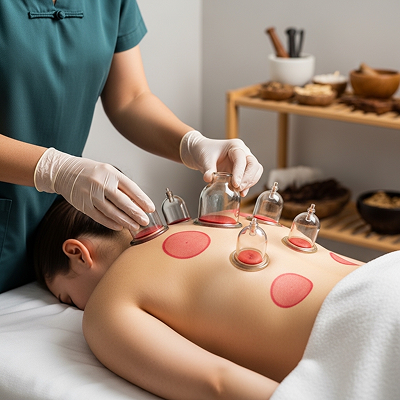
During a typical cupping therapy session, cups are placed on targeted areas of the body to create suction against the skin. In traditional fire cupping, a practitioner briefly warms the inside of a glass cup before placing it on the skin, creating a vacuum effect as the air cools. This suction pulls on the skin and may increase blood flow to the treated area, while moving cupping uses oil so the cups can glide smoothly across larger muscle groups.
In China, cupping is used primarily to treat respiratory conditions such as bronchitis, asthma, and congestion; arthritis; gastrointestinal disorders; and certain types of pain. Some practitioners also use cupping to treat depression and reduce swelling. Fleshy sites on the body, such as the back and stomach (and, to a lesser extent, the arms and legs), are the preferred sites for treatment.
Is Cupping Safe?
While cupping is considered relatively safe (especially air cupping, which does not include the risk of fire and heat), it can cause some swelling and bruising on the skin. As the skin under a cup is drawn up, the blood vessels at the surface of the skin expand.
This may result in small, circular bruises on the areas where the cups were applied. These bruises are usually painless, however, and disappear within a few days of treatment. In addition, there are several instances where cupping should not be performed.
Patients with inflamed skin; cases of high fever or convulsions; and patients who bleed easily, are not suitable candidates for cupping.
Pregnant women should not have cupping on their stomach or lower back. If the cups are being moved, they should not cross bony areas, such as the ridges of the spine or the shoulder blades.
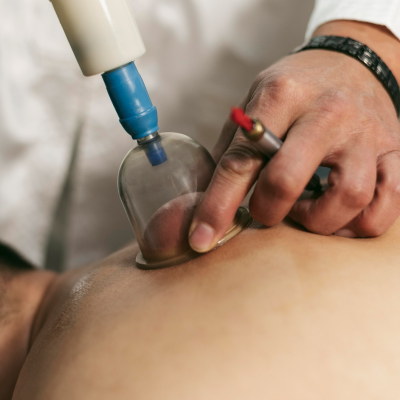
In addition to the traditional form of cupping described above, which is known as “dry” cupping, some practitioners also use what is called “wet” or “air” cupping. In “air” cupping, instead of using a flame to heat the cup, the cup is applied to the skin, and a suction pump is attached to the rounded end of the jar. The pump is then used to create the vacuum. In “wet” cupping, the skin is punctured before treatment. When the cup is applied and the skin is drawn up, a small amount of blood may flow from the puncture site, which are believed to help remove harmful substances and toxins from the body. To learn more about cupping in Vienna or any nearby city, call us today at 301-556-7777 to schedule an appointment.